Bread Crimes: How a Garbage Bun Is Quietly Murdering Your Perfect Patty
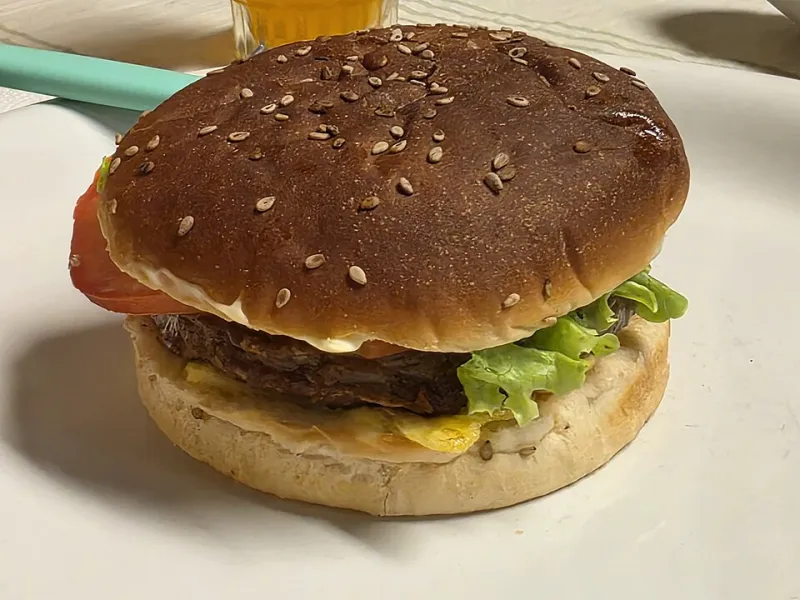
Photo: Horacio Cambeiro, CC BY-SA 3.0, via Wikimedia Commons
Let's talk about the crime scene nobody wants to investigate.
You spent forty-five minutes sourcing an 80/20 blend from the good butcher. You let your cast iron rip-roar until it was practically screaming. You timed the flip with the precision of a surgeon. You pulled off a burger patty so gorgeous it deserved a ring light and a fan blowing gently through its crust.
And then you put it in a bun from the middle shelf at Kroger. The one in the plastic bag. With the twist tie.
Congratulations. You just committed a bread crime.
The Bun Is the First Thing You Touch and the Last Thing You Think About
Here's the dirty truth about home burger culture in America: we have been collectively gaslit into believing the patty is the whole story. Food media obsesses over grind ratios, fat percentages, and smash techniques while the bun sits there, quietly collapsing under the weight of its own mediocrity, and nobody says a word.
But your mouth touches the bun before it touches the beef. Your hands are on the bun the entire time you eat. The bun is the frame around the painting, and right now most of us are hanging a Rembrandt inside a picture frame from the dollar section at Target.
So what actually makes a bun fail? Let's count the ways.
Why Supermarket Buns Are Built to Disappoint You
The standard supermarket hamburger bun has one job: survive long enough in a plastic bag to make it from the factory to your shopping cart. That's it. Shelf stability is the goal. Flavor and structural integrity are afterthoughts.
Mass-produced buns are typically loaded with dough conditioners, preservatives, and added sugars designed to keep them soft and squeezable for days. Which sounds fine until you realize that same engineered softness means the bun has roughly the structural confidence of wet tissue paper the moment anything warm and juicy touches it. A patty with any respectable fat content will dissolve the bottom bun in under three minutes. You're not eating a burger anymore. You're eating a beef puddle on a carb napkin.
The other issue is flavor—or the complete absence of it. Supermarket buns taste like nothing. Aggressively, intentionally nothing. They were designed to be neutral vehicles, which means instead of complementing your beef, they just kind of exist near it, radiating blandness in every direction.
The Grocery Store Options That Actually Slap
Not all hope is lost at the supermarket. You just have to know where to look and what to ignore.
Brioche buns have had their moment in the spotlight and for good reason—the butter content gives them actual flavor, and the slightly denser crumb holds up better against juicy patties. The trap is buying the overly sweet grocery store versions that taste like a dinner roll had a crush on a cupcake. Look for brioche buns with a more neutral, buttery profile rather than dessert-adjacent sweetness.
Potato rolls—specifically Martin's, which you can find at most major grocery chains across the US—are the cult classic for a reason. The potato starch content gives them a subtle chew, a slight sweetness that plays well with beef, and enough structural integrity to survive a double patty situation without completely surrendering. This is the correct answer for most home burger scenarios. Write it down.
Bakery-section buns, when your store actually has a real in-house bakery, are almost always worth the extra fifty cents. Fresher bake date, better crumb structure, no ingredient list that reads like a chemistry textbook.
Avoid: anything labeled "lite," anything pre-sliced paper thin, and anything that compresses to the thickness of a cracker when you squeeze it gently. That bun has already given up. Don't reward it.
Toast It or Lose It: The Technique That Separates the Serious from the Sad
Here is a non-negotiable rule of burger construction: toast the bun. Always. No exceptions. No debates.
An untoasted bun is structurally indefensible. The moment heat and moisture from the patty make contact, you have roughly ninety seconds before the bottom half becomes a soggy, collapsing mess. Toasting creates a barrier—a lightly crisped surface that slows moisture penetration and keeps the whole architecture standing long enough for you to actually eat it.
But not all toasting is equal, and this is where people get lazy.
Griddle with butter is the gold standard. Cut the bun, butter the cut sides generously, and press them face-down onto a hot griddle or skillet over medium heat. Watch it. Don't walk away. You want golden brown, not charcoal. The butter crisps the surface while adding fat and flavor that a dry toaster simply cannot replicate. This is what good burger spots do. This is why their buns taste like a component of the meal instead of an afterthought.
Dry griddle (no butter) still beats a toaster for most buns because the flat contact surface creates even browning. Add a drop of beef tallow or rendered burger fat if you have it in the pan and you will briefly question all your previous life choices.
A regular pop-up toaster is the worst option that still technically works. The radiant heat creates uneven browning, the curved surface doesn't toast the edges, and you get none of the fat enrichment that makes griddle-toasting worthwhile. Use it if you must. But know you're leaving flavor on the table.
Never microwave the bun. This should not need to be said. And yet.
What Restaurants Know That You Don't
Here's something the burger industry doesn't advertise: the best regional chains and independent burger spots are often fanatical about their bun suppliers in a way that borders on obsessive. These relationships are guarded like trade secrets. The bun is spec'd out—height, weight, crumb density, sugar content—with the same seriousness as the beef blend.
In-N-Out has its own proprietary bun. Shake Shack spent serious time developing the right potato bun spec for their product. Five Guys toasts their buns on a broiler specifically calibrated for their patty weight. None of this is accidental. None of this is the restaurant being precious. It's because people who build burgers professionally understand that the bun is a load-bearing structure, not decoration.
The takeaway for home cooks isn't to build a commercial bakery in your garage. It's to stop treating the bun as the boring administrative task of burger assembly and start treating it as a decision that matters as much as everything else you're doing right.
The Fix Is Genuinely Simple
Switch to Martin's potato rolls or a quality brioche bun from the bakery section. Butter the cut sides. Put them face-down in the same pan you just cooked your patty in, while the fat is still hot. Give them two minutes. Build your burger on a toasted bun that can actually hold the thing together.
Your patty did nothing wrong. Stop punishing it with bad bread.